UK Hookah Market Overview for Distributors and Importers
October 3, 2026
Hookah Market Seasonality: How to Plan Your Stock Year
October 3, 2026
Ask importers who sell into Russia and one theme returns fast: the russian hookah market behaves nothing like a typical emerging market. Demand is deep, spending is high, and buyers are unusually demanding about craft. The country’s hookah culture is homegrown rather than imported fashion — a night at a kalyan (кальян) lounge is a routine social ritual, not a novelty. That maturity changes how you supply it: what sells, how it is branded, who buys, and how it clears the border. This guide covers the premium dynamics, product preferences, channel structure, and the import realities to plan around.
What Makes the Russian Hookah Market Different
Most markets import their hookah culture. Russia built its own. The word itself is localized — кальян, kalyan — and the practice is woven into daily social life in a way Western markets rarely match. A kalyan lounge is not a themed novelty for tourists; it is a standard venue type in most cities, and in Moscow and St Petersburg a genuinely high-end scene sits alongside it, where hookah is part of a premium nightlife experience rather than a cheap add-on to the drinks menu.
Three consequences follow.
- Depth of the venue market. Lounge density is high, and every lounge is an operator buying hardware on a replacement cycle — bowls, hoses, valves, glass — not a single consumer buying one pipe. That is recurring demand, not a novelty spike.
- A discerning end customer. Because the culture is homegrown, consumers have opinions: they compare draw, build, and finish, and they talk, so a product’s reputation travels fast.
- A premium centre of gravity. Moscow and St Petersburg set the tone that regional cities follow. What looks good at the top quietly becomes the baseline elsewhere.
Russia rewards positioning, not volume dumping. Treat it as a price-sensitive clearing market and you will be read as cheap and skipped by the buyers worth having.
Premiumization and Design: Why Cheap Ranges Struggle
In Russia, a hookah is something the buyer looks at, holds, and shows off. Design, materials, and workmanship are the first filters; price is compared only among items that already pass that test. That is the opposite of a market where the lowest quote wins by default.
What “premium” means here is concrete and inspectable:
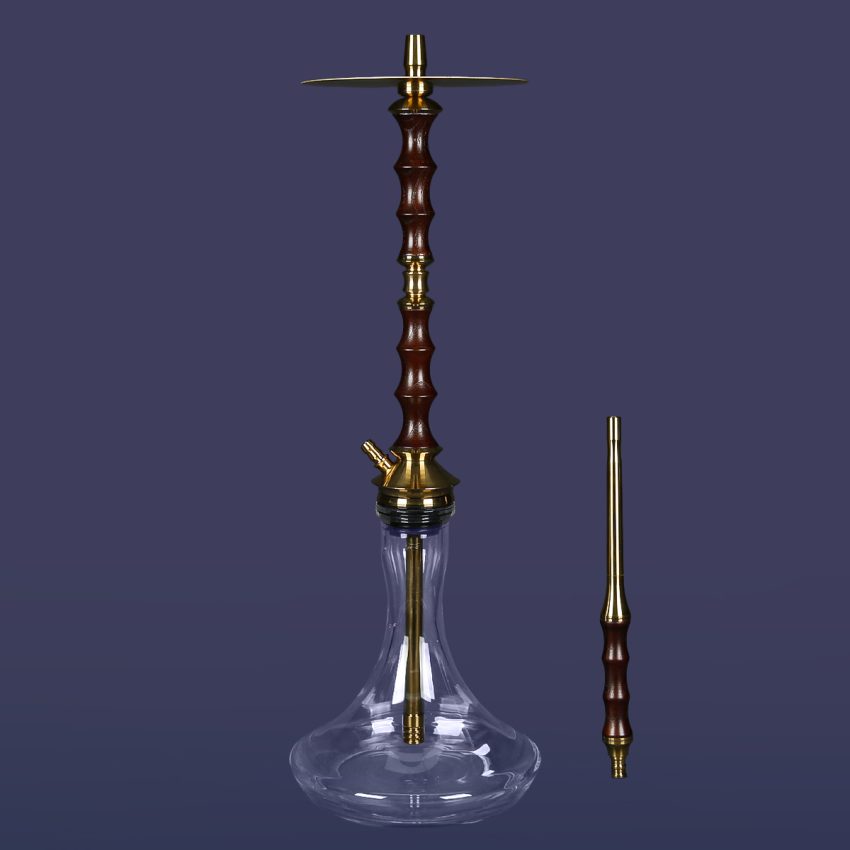
- Finish and weight. A stem that feels solid, consistent plating or brushing, no visible weld marks or machining burrs.
- Fit and alignment. Threads that engage smoothly, a stem that stands straight, a base that seats without wobble out of the box.
- Materials that read as quality. Heavier metals, thicker glass, fittings that hold their shape under heat and handling.
- A distinct aesthetic. A silhouette or ornamentation a buyer cannot find in every other shop — otherwise a customer has no reason to choose them.
A low-cost range can still sell at the bottom of the bar and lounge market, where it is bought on replacement cost — but the volume and margin sit higher up. A supplier whose only lever is price competes for the least profitable slice of a premium market.
Branding, Exclusivity, and the Local Brand Ecosystem
A large share of the market is served by local Russian brands, distributors, and lounge groups that design and market their own lines, often manufactured abroad. That is where a manufacturer’s real opening lies: not commodity product, but building under a partner’s name or a co-designed line that is theirs to defend.
What these buyers ask for is specific:
- Exclusive models. A shape or colorway that is theirs alone, so their range cannot be duplicated by the shop next door.
- Custom logo and engraving. On the stem, tray, plate, or base — and the mark has to survive real use and cleaning, not just a photograph.
- Private label. Own packaging, own manual, own brand story, with the factory staying invisible to the end customer.
Exclusivity is a genuine commercial tool in a brand-dense market. A partner who cannot offer something unique is forced to compete on price; a partner with a distinctive line competes on brand instead. Support them in that and the relationship lasts beyond a quote cycle. On the factory side, be ready with a clear, honest answer on MOQ per exclusive design.
Product Preferences: Sizes, Materials, Bases, and Accessories
Preferences cluster in a narrower band than in most Western markets: bigger, heavier, and better finished.
| Element | What Russian buyers lean toward | Why it matters |
|---|---|---|
| Size | Mid-to-large pipes dominate lounge orders; compact models serve the home segment | Presence on the floor and better draw; home buyers want something manageable |
| Stem / heart material | Stainless steel and brass at the premium end | Durability, a clean taste, and the sense of weight buyers associate with quality |
| Base | Thicker glass and heavier, more decorated designs | The base is the focal object — it is what is seen, handled, and photographed |
| Finish | Polished, matte, or plated looks executed consistently across a batch | Inconsistent finishing is the fastest way a range starts to look cheap |
| Accessories | A complete kit expected — hose, bowl, tongs, grommets, plates | Buyers judge the set; a missing piece is a reason to reject the whole range |
Two practical signals follow. First, brass and heavy stainless signal that the buyer is offering a premium product, and skimping on the metal reads immediately. Second, accessory completeness matters more here than in markets where buyers source parts separately. A Russian wholesale order is often a full set, and a partial kit forces the buyer to a second supplier — which they resent.
How the Russian Hookah Market Is Sold: Channel Structure
Where goods flow tells you whom to sell to and how to package the offer. Four channels matter, and each buys differently.
- Specialty hookah shops. The core of russia shisha wholesale. They stock deep, compare product constantly, and value a supplier they can reorder from reliably. Range depth and consistency beat a tempting one-off price.
- Lounges and cafés. The biggest volume consumers of hardware and consumables. They buy replacement items alongside display pieces, driven by durability and how a pipe looks on the floor night after night.
- Online specialty stores. Fast-growing and unforgiving on packaging and presentation. The product photo is the sale, so finish and packaging quality have to hold up under studio lighting.
- Chains and large distributors. Fewer accounts, bigger orders, more demanding terms. They buy for many outlets at once and expect exclusive or semi-exclusive lines plus marketing support.
A practical sequence: enter through specialty shops and online stores to learn what moves, then use that sell-through as proof when approaching lounge groups and chains, whose orders are larger but slower to win.
Hookah Import Russia: Certification, Labeling, and Settlement Realities
This is where preparation separates a smooth launch from a stalled container. The specifics change over time, so treat everything below as a framework and verify each requirement through official channels and a qualified local agent before committing to volume.
Conformity and labeling
Products sold in the Russian market fall under the Eurasian Economic Union’s conformity system. Depending on the item and its components, a certificate or declaration of conformity may be required, goods must carry the appropriate conformity marking, and packaging and instructions generally need to be in Russian. The classification and the applicable scheme follow the product, its materials, and its function — so a standalone glass base can be governed differently from a complete pipe. Do not assume another market’s certificate satisfies the requirement, or copy a code from a previous shipment without verifying it.
Where to verify: confirm the required certificates and declarations, and the current labeling rules, with an accredited certification body in the EAEU and with the relevant customs authority. Confirm the tariff classification and its current duty in the union’s common customs tariff. Work backwards from this — certificates and declarations must be in place before the goods are cleared, not arranged afterwards.
Payment and settlement
Banking and settlement routes into Russia have become less straightforward, and the options available to a given buyer can shift with little warning. Plan for that rather than discovering it at the deposit stage:
- Agree the currency and the payment rail early. Confirm with your bank which routes are genuinely workable for the buyer’s country and bank before you quote terms.
- Structure first orders defensively. A deposit with the balance against documents or before shipment is normal; extended open-account terms should be earned, not assumed on order one.
- Keep documentation clean. Clear invoices, accurate descriptions, and consistent values reduce friction at the bank and at customs alike.
- Have a second route ready. If one channel is unavailable at the moment of a shipment, a prepared alternative prevents a stalled order.
None of this is a reason to avoid the market — it is a reason to set expectations up front and choose terms that do not depend on the most fragile link in the chain.
Logistics path
Routing into Russia is a decision about reliability and lead time as much as cost. Options include sea freight into Baltic and Black Sea gateways with onward overland delivery, and overland or rail corridors from neighbouring regions. Which routes are practical, and their cost and transit time, can change; a forwarder who runs these lanes routinely will give a more accurate picture than any general guide. Two rules hold regardless: keep glass protected with molded or foam packaging and bases separated from stems, and confirm the Incoterm so freight, insurance, and import responsibility are unambiguous.
How to Enter: Product Entry Points and Risk Control
The right first move is a narrow, high-quality bet — not a catalog dump across every price point.
Which products to start with:
- Premium lounge pipes in mid-to-large sizes with stainless or brass stems — the product the market already rewards.
- A complete accessory set — bowls, hoses, gaskets, tongs — which lounges replace continuously and which proves your reliability quickly.
- One or two exclusive or custom-logo designs so your partner has something distinctive to sell from day one rather than competing on price.
A risk-control checklist for the first order:
- Order a physical sample before bulk, and judge it against the finish criteria above, not only the spec sheet.
- Start with a trial order at low MOQ. Typical industry MOQ for custom work varies with design complexity and is usually negotiable on a first order — confirm exact figures with your supplier rather than assuming.
- Secure conformity documentation for the specific products and materials you intend to import, before shipping.
- Set the Incoterm in writing and decide clearly who acts as importer of record.
- Use third-party inspection on the first significant shipment; reports on materials and construction protect both sides.
- Keep one design line stable rather than refreshing constantly — reliability earns reorders in a market with plenty of options.
FAQ: The Russian Hookah Market
Is the Russian hookah market really premium, or is that just the top tier?
Premium expectations run deep rather than being confined to a few luxury venues. Because the culture is homegrown and consumers compare products closely, material and finish quality functions as an entry requirement across much of the market, with price compared among options that already meet that bar. A cheap range can still sell at the very bottom, but the volume and the margin sit higher.
Do Russian buyers want local brands or international ones?
Both exist, but much of the market is served by local brands and lounge groups selling their own lines, frequently manufactured abroad. For a factory that is an opportunity: custom logo, private label, and exclusive designs are standard requests, not exceptions. Support a partner’s brand and you become a long-term supplier; offer only generic product and you stay a quote to be compared.
What certification do I need for hookah import into Russia?
Products sold in the Russian market fall under the Eurasian Economic Union conformity system, and depending on the item a certificate or declaration of conformity may be required, with goods marked accordingly and labeling generally in Russian. Because the requirement follows the product, its materials, and its function, confirm the exact scheme for each item with an accredited certification body and the customs authority before you manufacture.
Is it hard to get paid when selling into Russia?
Settlement routes have become less straightforward and can change, so the honest answer is: not impossible, but plan for it. Confirm with your bank which payment rails actually work for the specific buyer before you agree terms, structure first orders with a deposit and a documents-based balance, and have an alternative route ready. Discuss currency and rail at the quotation stage rather than the deposit stage.
Entering a design-led market rewards a supplier who can genuinely build to it. Hookah Omnis has spent 16 years manufacturing hookahs for importers, distributors, and lounge groups, with a wholesale hookah catalog of 400+ designs and OEM, ODM, custom-logo, and private-label programs built for exactly this kind of partner. We ship internationally every week. If you are weighing the Russian market, message us on WhatsApp for a straight read on ready-to-ship hookahs and MOQ, or start with our hookah wholesale FAQ.