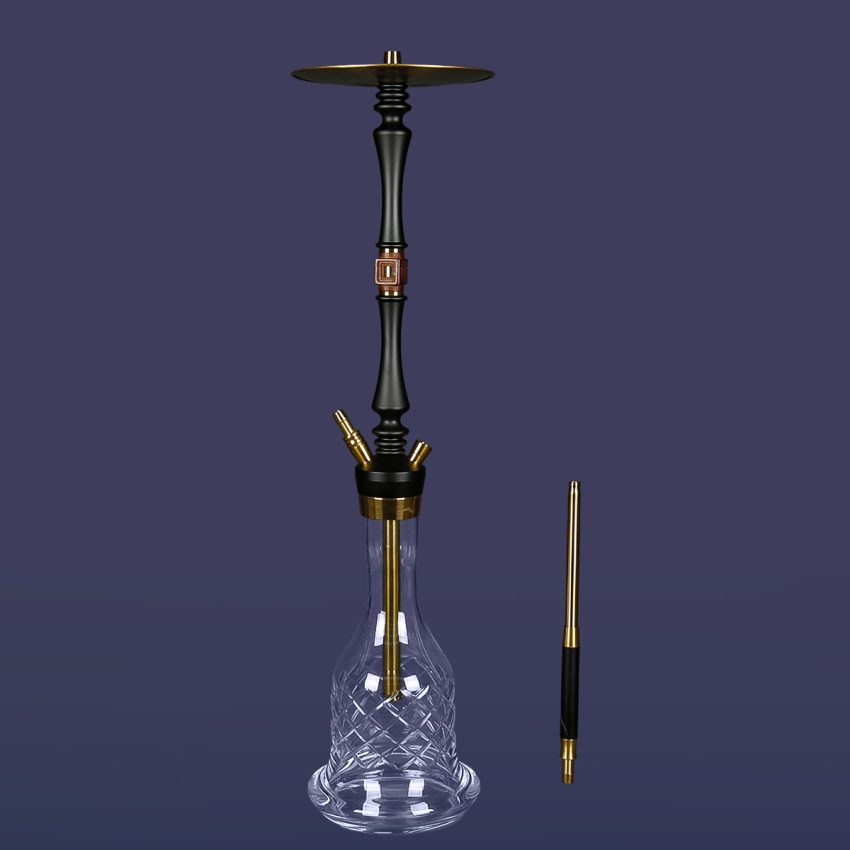
Mixed Container Loading for Hookah Orders: Combining Styles Efficiently
October 3, 2026
Özel Etiket, OEM ve ODM Nargile: Hangi Model Markanıza Uygun?
October 3, 2026
Hookah Material Comparison: The Short Answer Up Front
The material of the stem and body decides more about a hookah program than almost any other spec: the unit cost, the freight bill, the finish you can sell, and which customers will actually buy it. This hookah material comparison puts the three mainstream choices side by side, then explains where each one earns its place — and where buyers lose money by copying a material choice from the wrong market.
Three materials dominate wholesale production today: aluminium, stainless steel, and resin or acrylic. In practice, few serious products use one material alone — most sellable hookahs are mixed builds with a metal stem and a resin, wood, or glass accent. But you still pick the primary material first, because that choice sets your cost floor and your freight profile.
| Material | Weight | Durability | Cost | Machinability | Look and feel | Best-fit market | Typical price band |
|---|---|---|---|---|---|---|---|
| Aluminium | Light | Good, but dents and scratches show | Lowest | Excellent; machines and anodizes easily | Light in the hand; strong color options | Entry to mid-tier; price-sensitive buyers | Entry |
| Stainless steel | Heavy | Very high; corrosion resistant | Highest | Harder to machine; fewer colors off the shelf | Solid, cold, expensive | Premium retail, lounges, commercial use | Premium |
| Resin / acrylic | Light to medium | Impact resistant; weak against heat | Medium | Molds into any shape; low tooling for simple forms | Glossy, colored, non-metallic | Design-led, branded, novelty products | Mid |
Read the table as a starting point, not a verdict: a light aluminium unit and a heavy stainless unit can both be correct products, for different customers and at different freight costs.
Aluminium: The Volume Material for Entry and Mid-Tier Programs
Aluminium is the workhorse of high-volume hookah manufacturing, and for good reason. It is light, it is cheap, and it takes anodizing well, which means you can build a color range without touching the base metal cost much. For a buyer building a broad SKU line for online or mass retail, aluminium is usually where the volume lives.
The advantages are concrete:
- Low unit cost. Aluminium billet and machining are cheaper than stainless, so it works at price points a stainless build cannot reach.
- Easy finishing. Anodizing gives durable, uniform color across a full palette — matte, gloss, and metallic tones — the source of most branded color stories.
- Light shipping and fast iteration. Lower weight matters on every freight mode, most on air and express, and aluminium machines quickly, so samples and design changes move faster.
The trade-offs are real:
- Oxidation and finish wear. Bare aluminium oxidizes, and anodized surfaces can chip or wear at edges over time. It is not a corrosion problem the way untreated steel is, but it is a cosmetic one.
- Dents and scratches show. Aluminium is softer than stainless. A dropped pipe leaves a mark that stainless would shrug off.
- It feels light. This is a perception issue more than a performance one. Some premium-minded customers read light as cheap, no matter how good the product is.
If your target is a mid-price catalogue with many SKUs and colored finishes, an aluminium hookah is the efficient choice. If your customers equate weight with quality, think carefully before leading with it.
Stainless Steel: Where Durability and Premium Positioning Live
Stainless steel is the material buyers reach for when the product has to feel expensive and last. It is dense, corrosion resistant, and it holds a polished, brushed, or matte finish that reads as quality across markets. For lounge chains running heavy daily use and for premium retail lines, stainless is often the default.
Why it commands a higher price and earns it:
- Durability under commercial use. A stainless steel hookah resists dents, scratches, and corrosion far better than aluminium, which matters when a unit is handled dozens of times a day in a lounge.
- Perceived and real quality. The weight and cold feel signal a serious product, and customers in premium segments pay for that.
- Hygiene and cleaning. Smooth stainless is easy to clean and does not absorb odors the way some porous materials can.
The costs are equally concrete:
- Higher material and machining cost. Stainless is more expensive to buy and harder to machine, so a stainless hookah is typically quoted at a meaningful multiple of the aluminium equivalent for the same form — a typical industry direction, not a fixed ratio, since actual quotes depend on design and volume.
- Weight adds freight. Heavier units raise the freight bill on every mode, severely on air and express, and weight limits usage scenarios for customers who move the pipe around.
- Fewer easy colors. You get finishes and coatings, but not the cheap, broad anodized palette aluminium offers.
Choose stainless when your customer expects to pay for longevity — commercial lounges, premium retail, and buyers who specifically ask for it by name.
Resin and Acrylic: Design Freedom With Trade-offs
Resin and acrylic are the design materials. Because they are molded rather than machined, they can hold large curves, organic forms, and brand-specific shapes that metal cannot produce economically. A resin shisha body can carry a logo, a sculpted silhouette, or a colorway that becomes the product’s identity.
What they bring:
- Design freedom. Complex shapes, curves, and textures are possible in a way that is impractical in metal.
- Impact resistance. Resin and acrylic are less likely to dent or shatter than glass, which reduces breakage in transit and in use.
- Medium cost. Between the two metals, with low tooling on simple forms and higher tooling for complex ones.
What to watch:
- Heat resistance is limited. Resin and acrylic are not ideal for parts exposed to direct, sustained heat. Keep them to the body and decorative components, and use metal for heat-adjacent parts.
- Different feel. The tactile experience is non-metallic, which some premium customers notice. That is a positioning question, not a defect.
- Quality varies widely. Cheap resin and good resin are not the same product. Specify impact grade and finish quality rather than assuming all resin is equal.
Resin is the strongest choice for design-led and branded products, and the weakest for heat-critical parts.
Mixed-Material Constructions: Where Most Premium Hookahs Actually Sit
Pure single-material hookahs are rarer than buyers assume. The products that sell best on the premium side are usually engineered as systems, with each material doing the job it is best at. The common combinations:
- Aluminium stem with stainless accents. Keeps weight and cost down while adding the weight and finish of steel where the customer touches it. This is a very common mid-to-premium build.
- Wood and metal. Wood handles or bases give warmth and a traditional character that sells well in some markets; metal carries the structural and heat-facing parts.
- Glass and resin. Glass bases with resin or molded decorative elements blend the classic glass look with design freedom and lower breakage than glass alone.
- Stainless core with decorative shell. A durable steel core, dressed with a lighter cosmetic outer layer, gives premium durability without an all-steel weight penalty.
The practical rule: put metal where heat and stress are, and put resin, wood, or glass where the design and the brand live. A mixed build is often the best-value answer, not a compromise.
Market by Market: Why the Best Hookah Material Depends on Where You Sell
This is where most material mistakes happen. Buyers look at what sells in a strong market — usually the United States or a Gulf country — and copy that material into a market with different prices, expectations, and freight realities. The product is fine; the match is wrong.
The broad patterns worth knowing:
- United States. A very broad market. Mass and online retail respond to aluminium for price and color range, while premium shops and lounges pay for stainless and strong branding. The split is wide, so define your channel before your material.
- Europe. A strong premium and design culture, plus heavy pressure on materials compliance. Stainless and well-finished mixed builds do well at the top, aluminium at the value end, resin where design and brand lead. EU rules on materials in contact with smoke or heat can affect what is acceptable — confirm against current regulations before committing a design, and verify classification with official sources such as the EU TARIC and customs portals.
- Gulf markets. Demand for premium, heavy, traditional-feeling products is strong; stainless and high-grade metal builds are frequently the default in lounges and premium retail, and buyers often weight the product in the hand before checking price.
- Russia and nearby markets. Value orientation is strong: aluminium and mixed builds at accessible price points move well, while premium stainless still sells where branding supports it.
The takeaway: pick the material for your market and channel, not the one that happens to be trending. A stainless line fails on price in a price-sensitive market; an all-aluminium line fails on perception in a weight-conscious premium market.
The Parts Around the Pipe: Hose, Seals, and Bowl Materials
The stem and body get the attention, but three smaller parts decide whether the product works and sells. A quick material note on each:
- Hose. Silicone hose is the current default — flexible, washable, heat resistant, and easy to brand with colors and logos. Traditional leather or wood-tipped hoses still sell where a classic look is the point.
- Seals and gaskets. Silicone is the usual choice for heat and chemical resistance and a reliable airtight fit. Seal quality is the difference between a smooth draw and a leaking one, so specify it rather than leaving it to chance.
- Bowl. Ceramic and clay bowls are standard, chosen for how they hold and distribute heat. The firing quality and glaze matter for performance and for compliance in some markets.
These are small cost items that carry a large share of the customer’s experience. Do not spec the stem in detail and leave the seals to the factory’s default.
A Five-Question Framework for Choosing Hookah Materials
Answer these before you lock a design, and the right material is usually obvious.
- What is my target retail price point? Price sets the ceiling on material cost. A tight entry price rules out all-stainless; a premium price makes aluminium-only a harder sell.
- Who is the end customer? A commercial lounge buying for heavy daily use has different durability needs than a casual retail buyer who values color and design.
- Which sales channel? Online and mass retail reward broad color ranges and lower cost — the aluminium and resin strengths. Premium retail and lounge supply reward weight, finish, and durability — the stainless strengths.
- How freight-sensitive am I? If most of your volume ships by air or express, weight per unit is a direct cost lever, and lighter materials win. On full sea containers the effect is smaller but still real.
- What does my market expect in the hand? If buyers weigh the product before they read the price, lead with steel and mixed builds. If they respond to color, design, and cost, lead with aluminium and resin.
When the answers conflict, the conflict is usually price against weight and perceived quality. Resolve it with a mixed-material build before you compromise the whole product on one material.
FAQ: Hookah Material Comparison
Which material is the most durable?
Stainless steel, by a clear margin. It resists dents, scratches, and corrosion better than aluminium and holds up under the heavy handling of commercial lounge use. Resin and acrylic resist impact well but are weaker against heat. For a product that must survive years of daily use, stainless or a stainless-core build is the safe choice.
Which material sells best?
There is no single best-seller — market decides. Aluminium and mixed builds sell best where price and color drive the decision, which is most volume retail. Stainless sells best in premium retail and lounge supply. Resin sells best for design-led and branded products. The best hookah material is the one that matches your channel, not the one that tops someone else’s market.
Is an aluminium hookah lower quality than stainless?
No. It is a different product for a different price point. Aluminium is cheaper and lighter, which suits value and mid-tier programs; stainless is heavier, more durable, and pricier, which suits premium and commercial use. Judging aluminium by stainless standards is a category error, not a quality verdict.
Can I mix materials in one hookah?
Yes, and most strong products do. Use metal for heat-facing and structural parts, and resin, wood, or glass for the design and brand surface. A mixed build often delivers premium feel at a better cost and weight than an all-metal product.
Choosing hookah materials is a matching exercise: your price point, your channel, your market, and your freight route all point to a build. Hookah Omnis has spent 16 years manufacturing hookahs for importers, distributors, and lounge chains, and can quote aluminium, stainless, resin, and mixed-material programs on the same design so you can compare real cost and weight. Browse the wholesale hookah catalog — 400+ designs across OEM, custom-logo, and private-label work — check current ready-to-ship hookahs, or message us on WhatsApp with your target market and price point for a material recommendation. More buyer questions are answered in our hookah wholesale FAQ.