Hookah Retail vs Wholesale: Which Channel Fits Your Business?
October 3, 2026
German Hookah Market: Consumer Preferences & Wholesale Opportunities
October 3, 2026
The Gulf Hookah Market: What Wholesale Buyers Need to Understand
The gulf hookah market is not just the world’s biggest volume opportunity for shisha hardware — it is a different kind of market, with its own taste, channels, and expectations of a supplier. A model that sells in a European webshop often looks cheap in Riyadh; a design a Gulf distributor calls entry-level can be too ornate for a price-led Western catalogue. This guide maps how the region actually buys: the cultural drivers, the premium logic, the channels, the seasonal calendar, and the sourcing and compliance realities behind a clean container.
The Cultural Foundation: Why the Gulf Buys Differently
Shisha is woven into Gulf social life in a way it is not in most Western markets. How it is used — not just how much is bought — is the fastest way to understand the product spec.
Offering a guest a pipe is an act of hospitality, close in spirit to pouring coffee, and that drives buying behaviour. Home use is not fringe: households keep several pipes so a gathering runs without anyone waiting, and the pipe on the table is on display as much as it is used. That is where demand for larger, decorative units and presentation-ready sets comes from — a household buying for guests wants something that looks generous on the sitting-room floor, not the lowest unit price.
The cafe and lounge sits at the centre of the region’s evening culture, a default meeting place for friends, family, and colleagues. Venues range from modest local cafes to large, design-led lounges, and the two ends buy very differently: the local cafe cares about durability, throughput, and how fast staff can clean a pipe, while the premium lounge cares about appearance, brand presence, and a pipe that reads as elevated to a paying guest.
The consequence: the gulf hookah market splits into distinct price tiers that rarely overlap. One mid-range model sold to both ends usually satisfies neither.
A Premiumization Market: Craft, Material, and Design
In much of the world, hookah hardware is a commodity and buyers compete on price. In the Gulf the opposite pressure is stronger: buyers ask what makes a unit feel expensive, and they will pay for it. This shapes the saudi hookah market and its neighbours more than any other factor.
Where a Western reseller starts from a target price, a Gulf buyer starts from the design and works back to the price. The features that carry the premium:
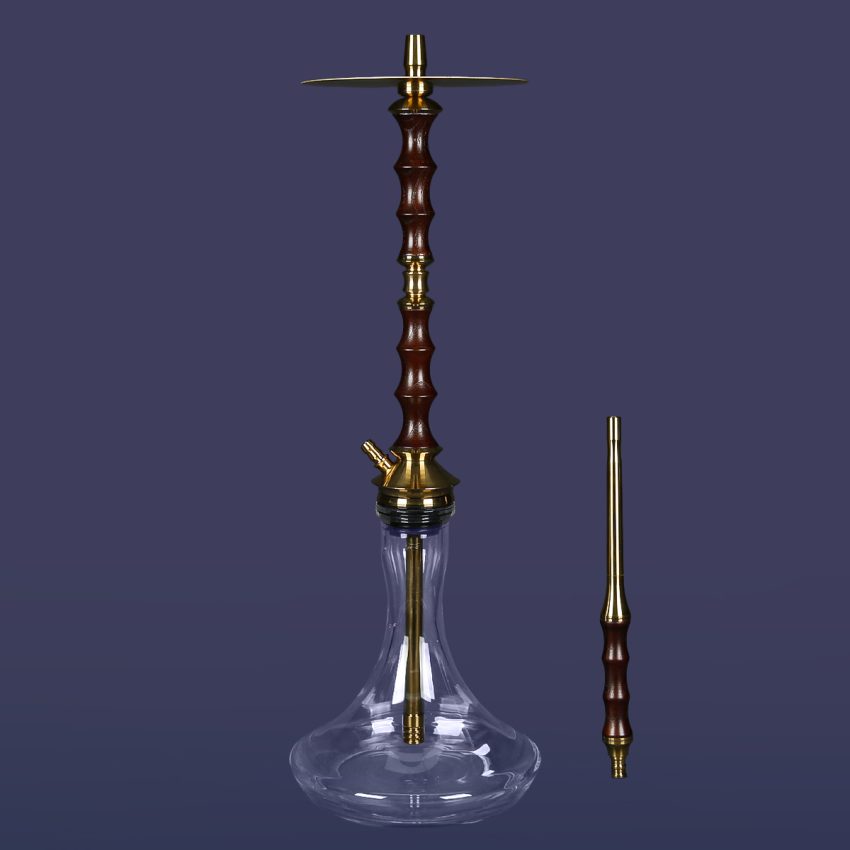
- Gold and brass finishes. Gold-toned and brass-look finishes — plated, painted, or anodised — are mainstream, not niche. A warm metallic finish reads as premium where matte often does not.
- Ornate detailing. Engraved, heavily decorated stems and trays sell. Restraint is a Western instinct; decorative density is a feature here.
- Substantial materials and mass. Weight signals quality. A pipe that feels light is read as cheap no matter how well it is made.
- Large formats. Taller units and bigger bowls suit group, hospitality-driven use and the pipe’s display role.
- Design coherence. A stem, base, tray, and hose from one product family sell as a set far better than mismatched parts.
The logic: the buyer is reselling an impression, not just a pipe. Anything that strengthens it — finish, engraving, packaging, weight — opens a higher price band, and here that trade-off is usually worth making. A spec built purely to hit the lowest cost tends to underperform on the shelf.
Brand Awareness: Packaging and In-Store Experience Matter
Gulf buyers think about branding earlier and more seriously than many counterparts, and two things follow.
First, packaging is product. A pipe that arrives in a plain brown box undercuts its own premium positioning. Retail-ready packaging, a branded outer, printed artwork, and a coherent look across a line are frequently requested as part of the base offer, not an option. For a distributor or lounge chain building its own label, this is where OEM, ODM, and private-label capability decides supplier selection.
Second, in-store experience carries weight. Gulf retailers invest in display, and a supplier who supports that — with unit packaging, point-of-sale presentation, and a design story staff can explain — is easier to sell through. Lead with customization capability, not your lowest price. Our wholesale hookah catalog is built around design families for exactly this reason: buyers here shop the family and finish first, then negotiate volume.
How the Gulf Hookah Market Sells: Channel Structure
Demand flows through four channels, each with different buying behaviour. Knowing which one a prospect belongs to tells you what to quote.
Specialty hookah shops
Dedicated hookah and tobacco stores are the classic trade channel. They carry depth — many models, finishes, hoses, bowls, accessories — and their buyers are knowledgeable. They respond to a broad catalogue with clear design differentiation, because they need reasons for a customer to choose one pipe over another.
Lounges and cafes
Hospitality venues buy for their own use, not resale, so they prioritise durability, ease of cleaning, and consistency across a fleet. A lounge chain wants the same pipe again in twelve months, so specification discipline matters more than novelty. This channel also buys consumables and spares as an ongoing line.
Duty-free and travel retail
Airport and travel retail is smaller but distinct: products compete as gifts and impulse buys, so presentation, box packaging, and brand identity carry disproportionate weight. Buying teams are often separate from the general trade with their own listing rules — treat them as a different customer, not a bigger order.
Cross-border e-commerce
Online and social-commerce sellers are the fastest-growing route to the consumer, and they buy differently again: tighter SKU counts, more emphasis on photography and packaging, and higher sensitivity to unit weight because it drives fulfilment cost. This channel is increasingly central to UAE shisha wholesale, where parcel-based selling rewards a compact, well-packed, photographable product.
Product Preferences: Sizes, Bases, Hoses, and Accessories
Taste here has clear tendencies, but they are tendencies rather than rules. Note too that “bigger” is relative, and that a premium finish still has to survive real use: a decorated pipe that scratches in a week is a complaint and a return.
| Component | Common Gulf preference | Why it sells |
|---|---|---|
| Overall size | Mid to large; taller units for home and lounge use | Matches group hosting and the display role of the pipe |
| Hookah base | Decorative, heavier glass; bell and curved profiles over plain cylinders | Base shape is a large part of the visual impression |
| Finish | Gold, brass, and warm metallic tones; engraving and detail | The primary driver of perceived value here |
| Hose | Comfort over minimalism; longer hoses for sharing and washable designs for hygiene | Group use and repeat cleaning in lounges |
| Accessories | Tongs, wind covers, trays, extra bowls and grommets bought alongside the pipe | Retailers sell add-ons; lounges need replacements on rotation |
Price Bands, Seasonality, and Middle East Hookah Trends
On price, the market spans from economy units in price-led channels to premium, decorative models for the hospitality trade. Think in tiers, each wanting a different specification: the further up the market, the less the conversation is about unit price and the more it is about finish, packaging, and design. Prices and duties vary by country and shift over time, so use your distributor or current quotes for figures.
On seasonality, the buying cycle follows the social calendar, not the calendar year:
- Ramadan shifts the pattern, not the demand. Daytime trade slows and the evening hours after the fast become the busiest social period of the year, for lounges and home gatherings alike. Venues restock ahead of the month, so orders are placed in the weeks before, not during — plan production and shipping to land stock well in advance.
- Eid and the holiday periods bring another wave of gift buying and entertaining, favouring presentation-ready and boxed products.
- The cooler season is the high season. Where summer heat pushes people indoors, the cooler months support outdoor gatherings and heavier lounge attendance.
Know when the buyer’s season is and work backwards. Suppliers who hit a pre-season delivery window cleanly win repeat business; those who confirm late cost their buyer a season. These are among the most durable middle east hookah trends to plan around.
Sourcing and Doing Business in the Gulf: Agents, Terms, Inspection
The commercial mechanics of a Gulf order have a few regional habits worth planning for.
- Local agents and distributors are the norm. Most meaningful volume moves through an established importer or agent with local presence and relationships. Expect a clear territory understanding, and expect the relationship to be judged on reliability across several orders.
- Payment terms start tight and open up. A first order is usually deposit-and-balance; open terms are earned over repeat business. Agree the mechanism in writing — bank transfer, letter of credit, or a documentary arrangement — and be explicit about what triggers the balance.
- Inspection is expected — welcome it. Buyers commonly inspect before or at shipment, and some arrange third-party inspection at the factory. Pre-shipment inspection protects both sides: it documents the condition at load, the best defence against a claim raised after a long sea voyage.
- Exclusivity is a negotiation, not a courtesy. Distributors ask for protection by territory or channel. Tie any exclusivity to performance — volume, marketing, or a minimum order schedule — and define what happens if commitments are missed.
- Consistency beats cleverness. The tenth container should match the first, and the buyer should be able to reorder without re-explaining the spec. In a market where relationships are long, that reliability is the real advantage.
If speed matters more than a custom build, documented stock is easier for a buyer to commit to — see our ready-to-ship hookahs.
Compliance: Where the Buyer’s Responsibility Sits
Each Gulf country runs its own conformity and customs regime. Saudi Arabia operates the SASO and SABER framework; the UAE operates its own standards and regulatory structure through MOIAT; other GCC states have their own systems. Hardware and tobacco consumables also travel on different regulatory tracks, and a mixed shipment can involve more than one set of rules.
This guide deliberately does not spell out scheme clauses, document numbers, or procedures — they change, and getting them wrong is expensive. Handle compliance as process, not memorised detail:
- Confirm which regulatory track each line item falls under — device, accessory, or consumable — before you build a spec or a quote.
- Verify current requirements through the official channel for the destination country, and confirm the tariff line and any conformity obligations with your importer or a licensed local agent.
- Treat compliance as a pre-shipment exercise — discovering a required report after the container is on the water adds weeks and cost.
- Have packaging and labelling artwork reviewed by the importer before printing, not after.
On responsibility: conformity assessment, certification, and customs obligations rest with the importer of record and are best handled with a licensed local agency. A manufacturer can supply the tests and specification discipline that smooth certification — but the decision belongs with your importer and the relevant authority. Confirm current requirements before you commit to a shipment.
FAQ: Gulf Hookah Market Questions for Wholesale Buyers
What makes the gulf hookah market different from Europe or the US?
Taste runs toward the decorative and premium — gold and brass finishes, ornate detailing, larger formats — where many Western markets reward minimalism and price. Usage is also social and hospitality-driven, so the pipe is often a display object as much as a smoking device. Both push buyers toward higher-specification products than a comparable Western account would order.
Which products should I lead with for a first Gulf order?
Start with a coherent design family in a warm metallic or gold finish, mid-to-large, with retail-ready packaging and the accessories alongside it — trays, tongs, extra bowls, hoses. Let the channel refine it: a lounge chain prioritises durability and reorder consistency; a retailer or e-commerce seller prioritises design range and presentation.
How does the local trade prefer to pay, and what should I expect on inspection?
Expect deposit-and-balance on a first order, with open terms requested as the relationship develops, and agree the mechanism and the balance trigger in writing before production. Inspection is standard: many buyers inspect before or at shipment, and some arrange third-party inspection at the factory — welcome it, as it protects you as much as the buyer.
Who is responsible for certification, and does the supplier handle it?
Certification and customs obligations sit with the importer of record and are typically managed through a licensed local agent or broker. The supplier’s role is to provide documentation, test reports, and specification consistency that make certification straightforward. Requirements vary by country, so verify current rules with the relevant authority before shipping.
If you are building or expanding a Gulf programme — OEM, ODM, custom logo, or private label — the fastest path is a conversation about your specification and target channel. Message our team on WhatsApp and we will come back with a straight answer on models, MOQs, and lead times. For general questions, the hookah wholesale FAQ is a good first stop, and Hookah Omnis supplies distributors, brands, and lounge chains across the region direct from the factory.